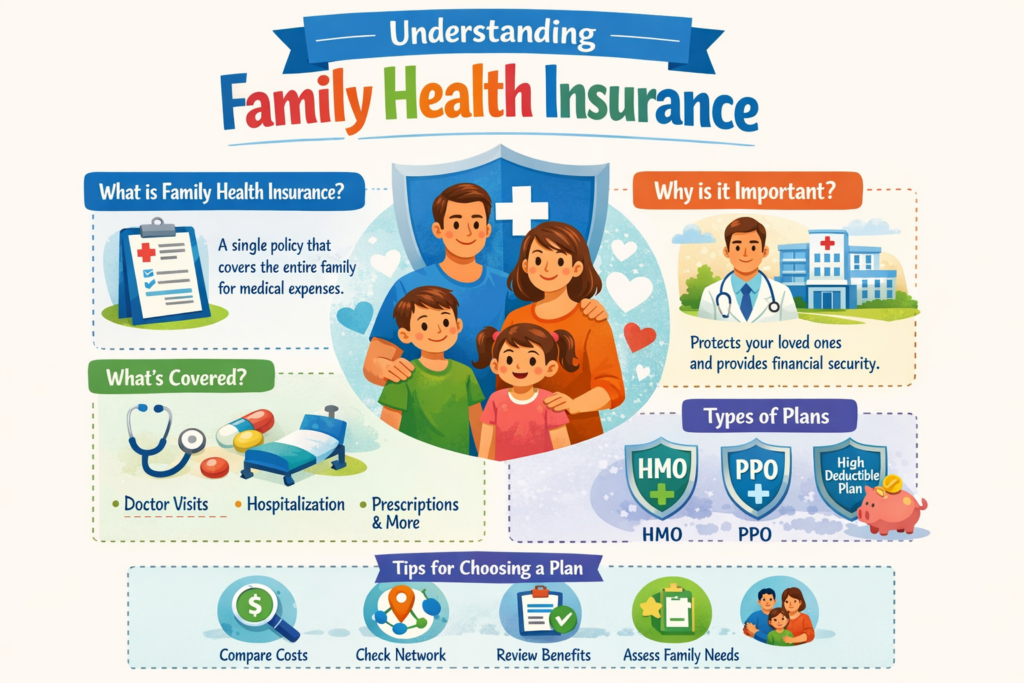
Family health insurance is an essential safeguard for households, ensuring that medical emergencies and health-related expenses don’t become a financial burden. With the ever-increasing cost of healthcare, understanding how family health insurance works, its benefits, and what to look for in a policy is more important than ever. This article breaks down the basics of family health insurance to help you make informed decisions for your loved ones.
What Is Family Health Insurance and How Does It Work?
Family health insurance is a type of health coverage that provides medical benefits to all members of a family under a single policy. Instead of purchasing individual plans for each person, a family floater plan covers the policyholder, spouse, children, and sometimes even dependent parents. The insured sum is shared among all covered members, allowing coverage to be used as needed by any family member.
Typically, a family health insurance policy covers hospitalization, doctor visits, surgeries, prescription drugs, and sometimes preventive health checkups. Premiums for these plans are generally higher than individual plans but more cost-effective than buying separate coverage for each family member. The policyholder pays an annual or monthly premium, and in return, the insurer covers eligible medical expenses up to the chosen sum insured.
Upon hospitalization or any covered medical event, the policyholder can either opt for cashless treatment at network hospitals or get reimbursed for expenses incurred at non-network hospitals. The claims process is usually streamlined, especially with cashless facilities, offering peace of mind during stressful times. Understanding these basics is crucial for selecting the right plan for your family.
Key Benefits of Choosing Family Health Insurance Plans
One of the primary advantages of family health insurance is convenience. With a single plan, you manage one policy, one premium, and a consolidated sum insured that any covered member can use. This simplifies paperwork, renewals, and claims, making it easier to manage than multiple individual policies.
Family floater plans also offer cost-efficiency. Insurers often offer discounts for bundling policies, lowering the premium per individual compared with separate policies. Additionally, children up to a certain age (often 25 years) and dependent parents can be added to the plan, helping families affordably meet the healthcare needs of different generations.
Another notable benefit is comprehensive coverage. Most family health insurance plans offer a broad range of benefits, including maternity coverage, newborn coverage, preventive health check-ups, daycare procedures, and critical illness riders. With rising medical costs, access to comprehensive coverage under a single umbrella can be invaluable during medical need.
Important Factors to Consider Before Purchasing Coverage
When shopping for family health insurance, the sum insured is one of the most important factors to consider. It should be sufficient to cover potential medical costs for the entire family, especially if there are multiple hospitalizations in a year. Choosing a sum insured that is too low can leave you exposed to out-of-pocket expenses, while choosing one that is too high can lead to unnecessarily high premiums.
Age and health status of family members also play a significant role. Because premiums are calculated based on the eldest member’s age, premiums may be higher for families with older parents. It’s essential to assess whether to include aging parents in the floater plan or buy a separate senior citizen policy for them.
Additionally, pay close attention to policy terms such as waiting periods for pre-existing diseases and coverage for critical illnesses. Also, network hospital availability, and sub-limits on room rent or specific treatments. Understanding these details helps avoid surprises during claim time and ensures the policy meets your family’s healthcare needs.
Common Exclusions and Limitations in Family Policies
Family health insurance plans do not cover everything, and it’s vital to be aware of the typical exclusions. Common exclusions include pre-existing diseases during the waiting period and cosmetic or plastic surgery. Also, dental and vision care (unless due to accidents), and injuries resulting from hazardous activities or substance abuse.
Most policies also have waiting periods for certain ailments, such as maternity benefits, pre-existing conditions, or specific diseases such as hernias or cataracts. During this time, related treatment expenses are not covered. Understanding these waiting periods is crucial to avoid disappointment when filing claims. Understanding Family Health Insurance is essential.
Other notable limitations can include sub-limits on hospital room rent, restrictions on certain treatments, and caps on ambulance charges or post-hospitalization expenses. Knowing these exclusions and boundaries helps you set realistic expectations and plan your family’s finances.
Tips for Comparing and Selecting the Best Family Plan
When comparing family health insurance plans, start by assessing the sum insured and the premium. Look for plans offering the best balance between coverage and affordability. Use online comparison tools to evaluate features, inclusions, and claim settlement ratios of different insurers.
Review the hospital network list for cashless treatment availability, particularly in your city or locality. A wider network makes it easier to access hassle-free medical care near you. Additionally, consider policies with quick and transparent claim processes. Claim settlement efficiency is crucial during emergencies.
Check for added benefits such as free annual health check-ups, no-claim bonuses, restoration of sum insured, and minimal co-payment requirements. Reading customer reviews and consulting with insurance advisors can also provide valuable insights. Taking the time to research and compare helps you select a plan that best fits your family’s unique healthcare needs.
Conclusion
Understanding Family Health Insurance is vital to safeguarding your loved ones’ health and financial stability. By understanding how these policies work, their benefits, and the factors to consider, you can make informed choices that provide comprehensive protection. Remember to review policy details, exclusions, and compare plans diligently. So your family can enjoy peace of mind and quality medical care whenever needed.